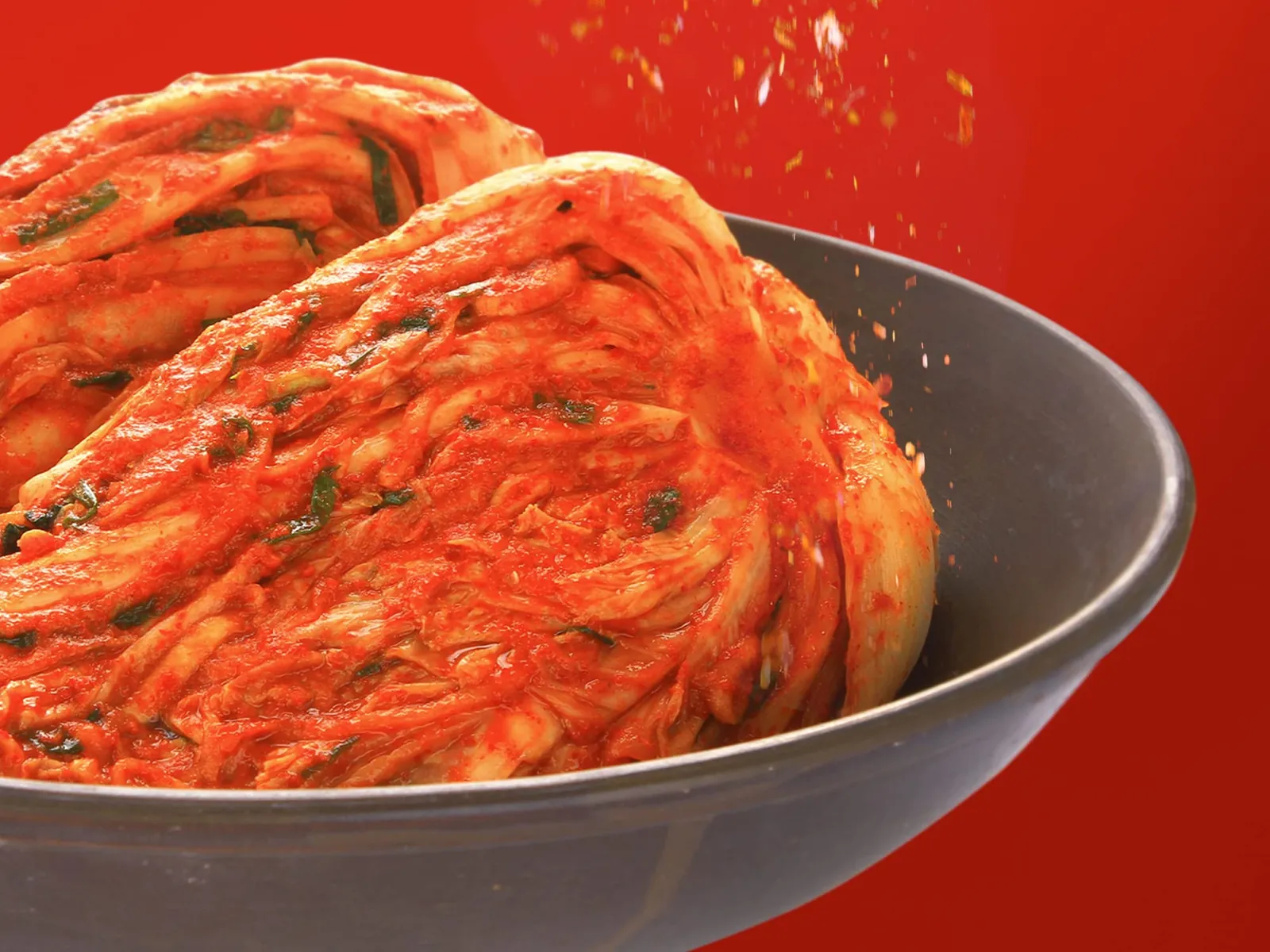
Gochugaru (고춧가루) is Korean-style red pepper powder: sun-dried red chilies ground into coarse flakes or a fine powder. It's the chili in kimchi, with a fruity, slightly smoky flavor and a medium heat, milder and sweeter than cayenne.
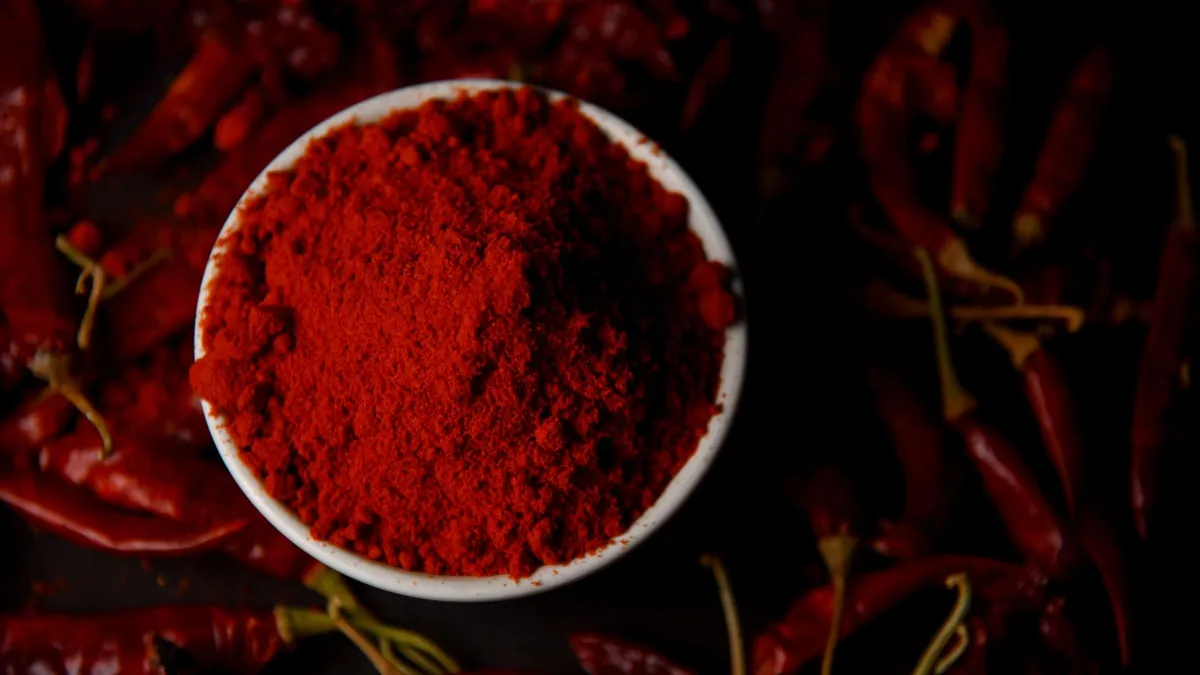
What the name means
In Korean, gochu means chili pepper and garu means powder. The word names a style of pepper and grind, and the flavor that goes with it: sun-dried red pepper, ground coarse or fine.
Taekyung's gochugaru is sun-dried red pepper and nothing else, from a Korean food company founded in 1979. Our story.
What it tastes like
Ripe and fruity first, a little smoky and a little sweet, then a warm heat that builds rather than bites. Good gochugaru is a bright, deep red and smells of dried pepper.
Flake or fine?
Gochugaru comes in two grinds. Most recipes that just say “gochugaru” mean flake.
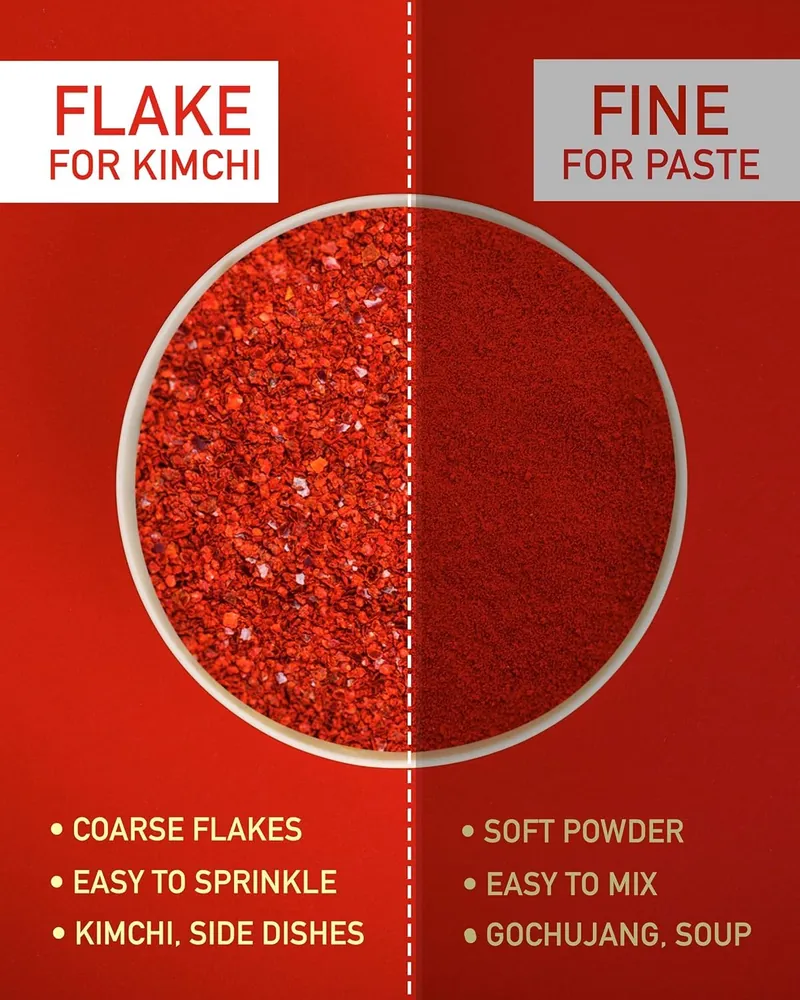
| Flake (굵은 고춧가루) | Fine (고운 고춧가루) | |
|---|---|---|
| Texture | Coarse flakes | A soft, even powder |
| Best for | Kimchi, BBQ rubs, stir-fries, noodles, sprinkling | Gochujang, soups, stews, sauces, marinades |
| In the dish | You see the red flakes | Smooth, even color |
| Heat per spoon | Medium | Tastes hotter, because it spreads through the dish |
For a first batch of kimchi, get flake. Fine is for when you want the color without the texture. Taekyung makes both: see flake and fine.
How hot is gochugaru?
Medium: about as hot as a jalapeño, with more fruit and less bite. Spoon for spoon, it's far milder than cayenne or crushed red pepper.
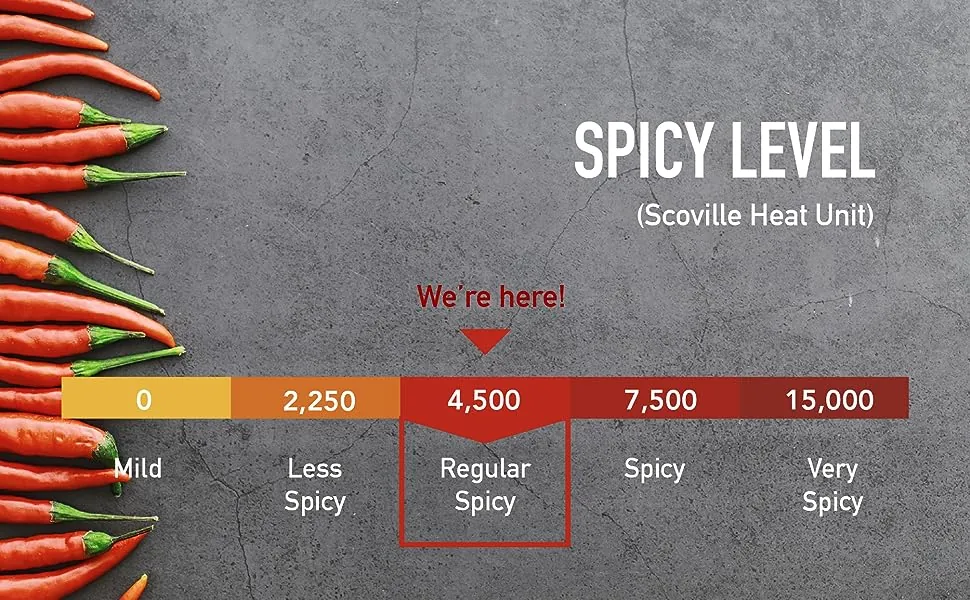
- Jalapeño: 2,500 to 8,000 Scoville heat units
- Taekyung gochugaru: about 4,500
- Cayenne: 30,000 to 50,000
Heat varies from crop to crop. Start with less than you think, taste, and add.
How much to use
- Kimchi: ½ to 1 cup of flake for one 4 to 5 lb napa cabbage. ½ cup is mild; 1 cup is classic. The recipe.
- Stew or soup for four: 1 tablespoon, then more to taste. Kimchi stew.
- Noodles, eggs, popcorn: a pinch to ½ teaspoon.
What to use it in
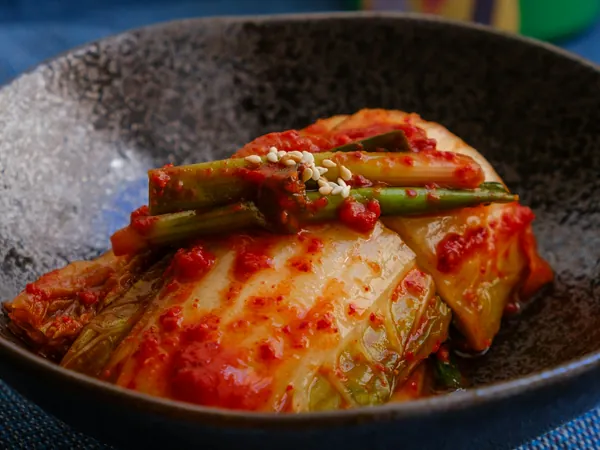
Kimchi of every kind
Napa cabbage, radish (kkakdugi) and cucumber (oi sobagi). Start with our recipe.
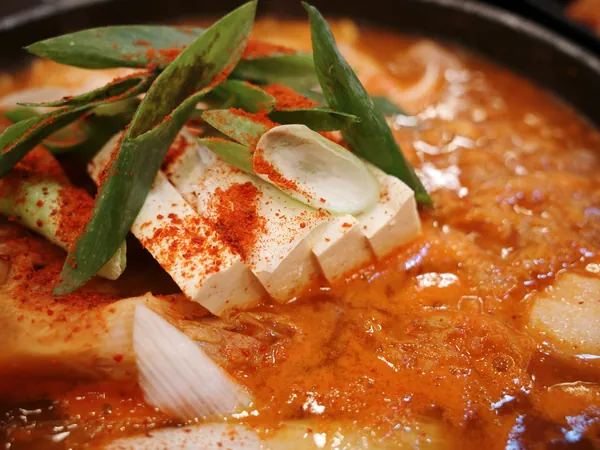
Stews
Kimchi jjigae and soft tofu stew (sundubu jjigae).
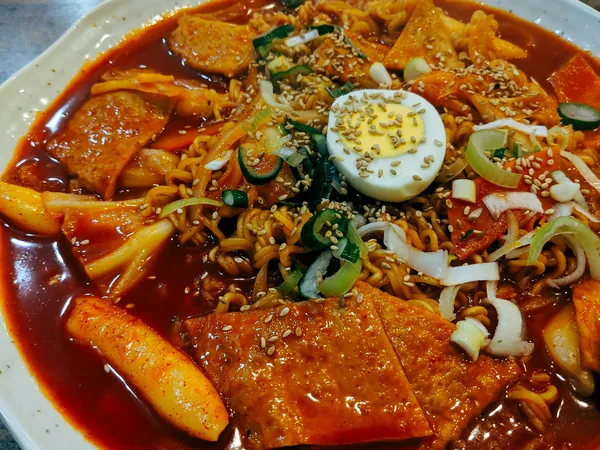
Tteokbokki
Chewy rice cakes in a sweet, spicy red sauce. The fine grind keeps it smooth.
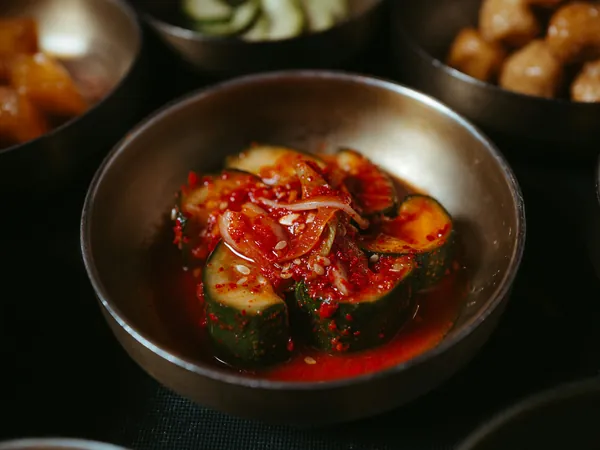
Quick sides
Spicy cucumber salad (oi muchim) and seasoned bean sprouts.
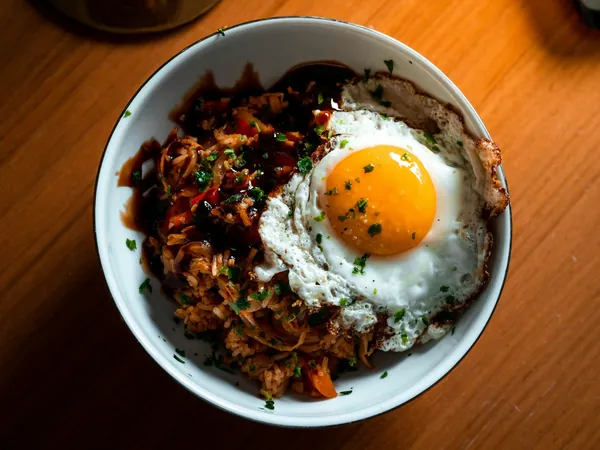
Rice, eggs and noodles
Fried rice, fried eggs, noodles and rice bowls.
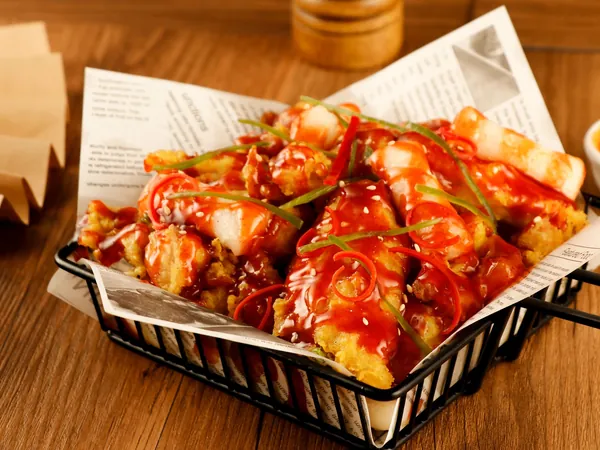
Wings and BBQ
In rubs, glazes and marinades.
And a pinch goes a long way on popcorn, roast vegetables and avocado toast.
What can I use instead of gochugaru?
For kimchi, nothing really works: the color and flavor come from the gochugaru. For other dishes:
- Aleppo pepper: the closest, fruity and medium hot. Use the same amount.
- Sweet paprika with a pinch of cayenne: the right color, with less fruit.
- Crushed red pepper flakes: much hotter and less fruity. Use about a quarter as much.
- American chili powder: not a swap. It's a blend with cumin, garlic and oregano.
Gochugaru or gochujang?
Gochugaru is the dried, ground pepper. Gochujang is a thick, sweet and savory fermented paste made from gochugaru, rice and fermented soybeans. They don't swap one for one: gochujang brings sweetness and body as well as heat.
Questions
Is gochugaru the same as paprika?
No. Both are ground red pepper, but gochugaru is hotter, fruitier and a little smoky, and the flake kind is coarser. Sweet paprika has almost no heat.
Can I use red pepper flakes instead of gochugaru?
In a pinch, but use about a quarter as much: crushed red pepper is much hotter and less fruity. For kimchi, it won't give you the same color or flavor.
Is gochugaru the same as chili powder?
No. American chili powder is a blend of chilies with cumin, garlic and oregano. Gochugaru is just pepper.
How much gochugaru do I need for kimchi?
½ to 1 cup of flake for one 4 to 5 lb napa cabbage. Start with ½ cup if you like it mild.